Thursday, December 6, 2012

It's All About Life Drawing...

Juliet D Collins, Study for Sarong, 2012

Life drawing is at the heart of all the art I make. This is more obvious with my thread and fabric work, each one of which has been developed directly from my life drawings. But it is also a very important element in my sculpture - my studies from the life model have always had a great influence on my ideas, designs and the development of the forms I create.


So I thought I'd write a little bit about life drawing - a whistle-stop tour through some of history's greatest artists who have practised & developed the tradition of this inspiring art form and why I feel it is important and relevant to draw the human form from life.

Life Drawing - the drawing of the human form directly from live models -  has been a fundamental part of the formal training of artists since formal art academies were first formed in the 16th century.

Artists have been drawing from the live nude model at least since the time of the Italian Renaissance. They began doing so in a quest to understand the human body better and to define the ideal proportions of the body. This era gave birth to the study of Anatomy. It is a well known fact that artists such as Leonardo da Vinci were illegally dissecting dead bodies in order to study their anatomy at this time. During the Renaissance the aim was to depict the idealised human form, to perfect nature in an attempt to convey the divine and to emulate the classical art of ancient Greece.

File:Da Vinci Vitruve Luc Viatour.jpg
Leonardo da Vinci's Vetruvian Man 1487
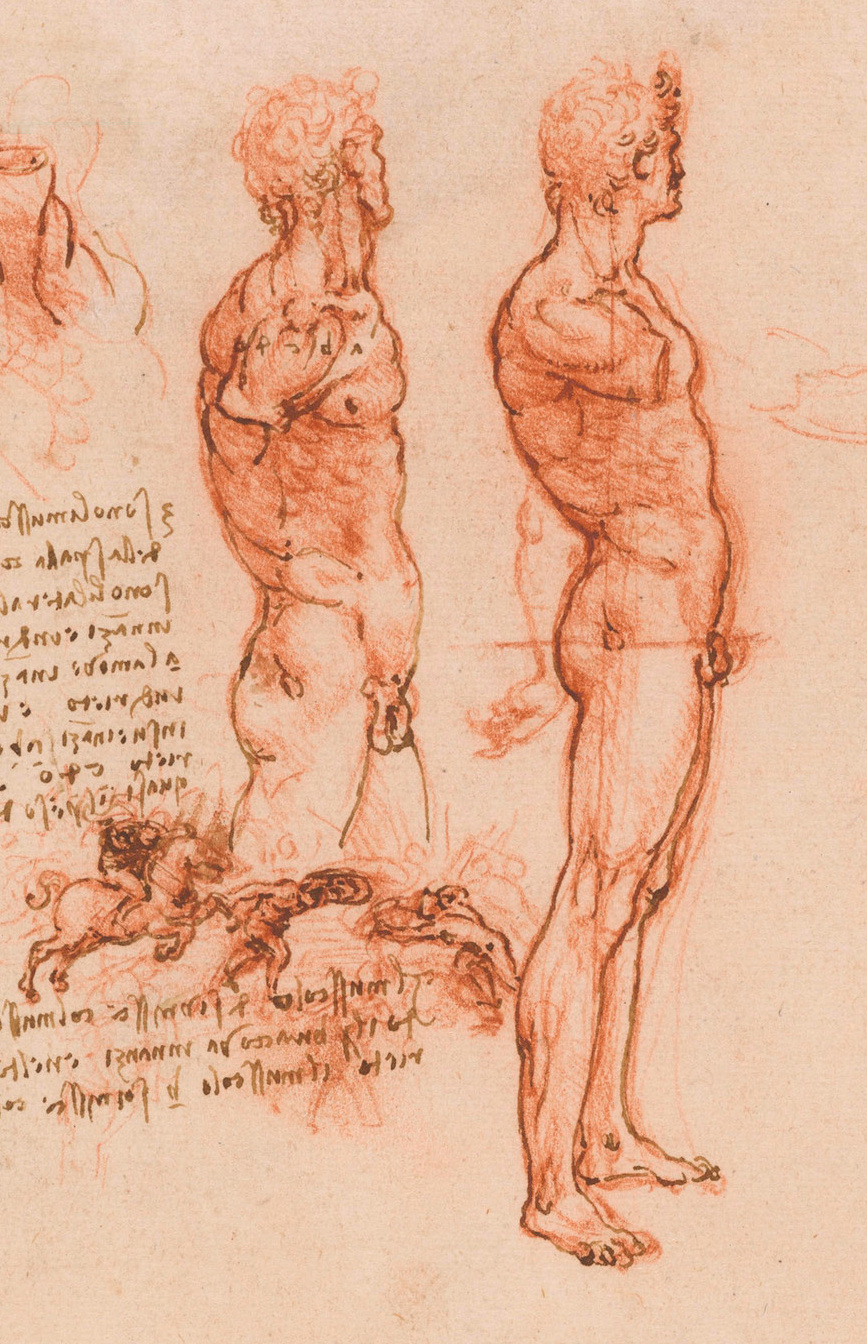
File:Anatomy of a Male Nude.jpg
Leonardo da Vinci, drawing, anatomy of a male nude 1504-1506


Artist such as Rembrandt - working in the 17th century -perfected drawing skills through careful observation and practise. Rembrandt considered his drawings from life to be a private record of his observations. His ability to depict the human form so accurately, with great economy of line and in a manner that conveys spontaneity and emotion, is just one of the reasons his works and skills are so very highly regarded.

File:School of Rembrandt - Sitting nude.jpg
Rembrandt, Sitting Woman


By the 19th century artists had replaced the aim of conveying divine and idealised perfection for the pursuit of realism. Toulouse Lautrec and his contemporaries relished in depicting everyday moments of the ordinary people around them.

Henri de Toulouse-Lautrec, Woman Sleeping

Egon Schiele is one of my favourite artists. Working in the early 20th century he is known for his intense and expressionist style. I'll need to devote a whole post to him at some point!

File:Egon Schiele - Sitzender weiblicher Akt mit aufgestützen Ellbogen - 1914.jpeg
Egon Schiele, Sitzender weiblicher Akt mit aufgestützen Ellbogen, 1914
Matisse aimed to look at everything "as though for the first time" and urged his students to do the same. He placed great importance on the observation of negative space. He studied and drew his subjects over and over again until he was capable of depicting them with a few quickly drawn lines that portray "the purest and most direct translation" of emotion.
Matisse, drawing
When I studied Fine Art, life drawing was still a core and essential part of the course. That was a while ago. Is it still a relevant art form?
I believe so. The human body is generally thought to contain every aspect of form, visual complexity and subtlety that an artist will ever encounter. The figure represents many technical challenges – form, structure, foreshortening, proportion and also allows us to express a great deal about human nature, to express mood personality and deep emotion.
Drawing the human figure regularly helps one to improve one's powers of observation and drawing skills. With practice, it allows us the opportunity to rise above our inner critic and gain skillful artistic mastery which we can apply to any artform we wish pursue.

Above all, life drawing is a wonderful, challenging, frustrating, joyful, sometimes painful and ultimately very rewarding artistic endeavour which can produce stunning works of art.


Tuesday, December 4, 2012

You are invited to a...


 Girls night in Drawing
Please join us for a relaxing evening of creativity
No experience necessary


$25
 Tuition in drawing basics, line and tone, try different media  & an opportunity to experience drawing with a life model


Materials provided
BYO wine & nibbles
Wednesday 12th Dec 7.30-10pm
 BRONS-ART STUDIO, Sandringham
Bookings essential. Places limited!
Also book now for 2013 Drawing classes:
 
·       Drawing for beginners
·       Life drawing
 
Mon & Wed  7-9.30pm
$240 per term


 Please contact Juliet
0403 774783
BRONS-ART STUDIO
Unit6/231 Bay Rd. Sandringham


Monday, December 3, 2012

Princess in Progress

It has been a while between blogs hasn't it! Whilst it may look like I have been having a very nice long rest, I can assure you that couldn't be further from the truth!! I have been so absorbed in my various projects I haven't taken the time to write anything! Sorry folks. To make up for it here is a sneak preview of my current work in progress. Above, one of the life drawing studies for the piece and below the initial stages and starting to piece it together. Lots still to do! This lovely lady is one of a series of 3 fairytale princesses I have planned.


As well as keeping busy in my studio with my works, I have been planning some exciting upcoming workshops and classes for adults and children!

WATCH THIS SPACE FOR  INFO ON UPCOMING CLASSES AND WORKSHOPS!!

Monday, October 22, 2012

Monday, October 15, 2012

Andy Goldsworthy

I absolutely love the work of Andy Goldsworthy and yesterday I was lucky enough to happen upon an exhibition of his photographs of his early work. What a thrill!

Andy Goldsworthy
Leaves polished, greased made in the shadow of the tree from which they fell, pinned to the ground with thorns.
Le jardin Massey, Tarbes, France,
22 August 1989

I find his works completely inspirational. They seem to reawaken and refresh my experience of the natural environment around me. Each piece has so much integrity - I really respond to the way we get the sense of the artist interacting and responding to the natural world. There is so much honesty in his representation of natural phenomena and I find the way in which he manipulates natural materials & environments thrilling! 

File:Storm king wall.jpg
Andy Goldsworthy
Storm King Wall
1999
I also have a thing for dry-stone walls!

For more information on Andy Goldsworthy:
http://www.ucblueash.edu/artcomm/web/w2005_2006/maria_Goldsworthy/TEST/index.html

Friday, September 28, 2012

The Dailiness of Life

"Creative work needs solitude. It needs concentration, without interruptions. It needs the whole sky to fly in, and no eye watching until it comes to that certainty which it aspires to, but does not necessarily have at once. Privacy, then. A place apart-a pace, to chew pencils, to scribble and erase and scribble again.


But just as often, if not more often, the interruption comes not from another but from the self itself, or some other self within the self, that whistles and pounds upon the door panels and tosses itself, splashing, into the pond of meditation. And What does it have to say? That you must phone the dentist,that you are out of mustard, that your uncle Stanley’s birthday is two weeks hence. You react, of course. Then you return to your work, only to find that the imps of idea have fled back into the mist."

Excerpt from "Of Power And Time" by the American poet Mary Oliver. It is taken from the book "Blue Pastures", 1995, Harvest Books.

laundry basket detail from Blue Jean


I have recently been introduced to the wonderful poetry and writings of Mary Oliver.

Her words really speak to me and this excerpt describes perfectly my constant daily struggle to balance "the dailiness of life" and my creative time.